
China vs. Vietnam: A Strategic Comparison of Import Costs for U.S. Businesses
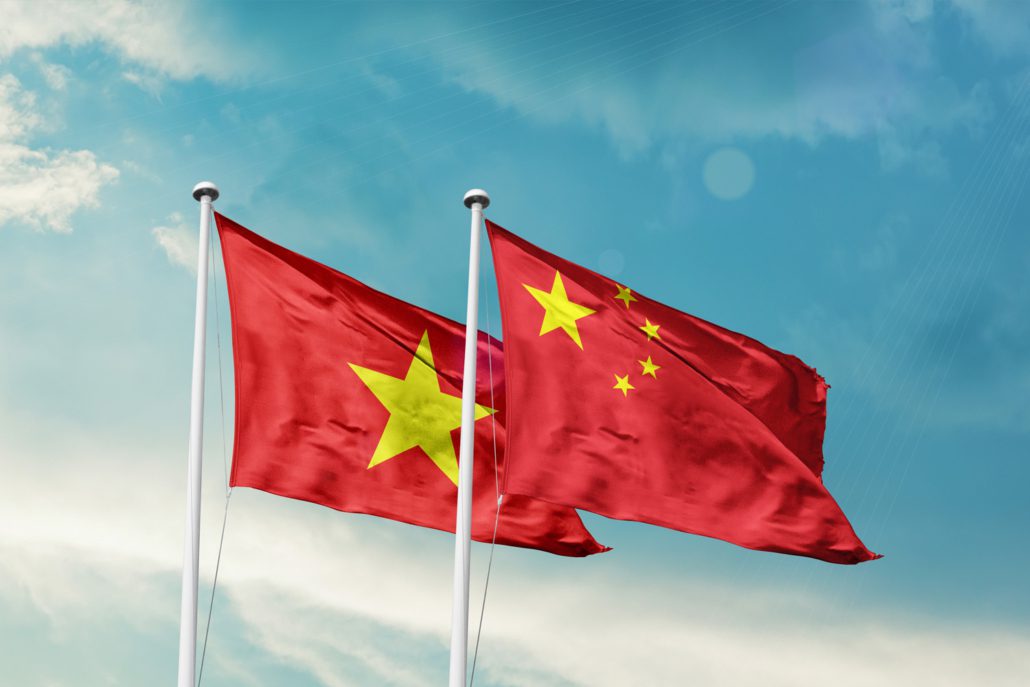
For U.S. importers, the sourcing decision has fundamentally changed. Manufacturing cost alone no longer determines profitability. What matters today is total landed cost — the full picture of duties, tariffs, freight, compliance, and risk built into every shipment from origin to delivery.
Two sourcing markets sit at the center of this conversation: China and Vietnam. Both offer distinct cost structures, regulatory environments, and logistical realities. Understanding how those differences play out in practice is no longer optional — it is the foundation of a sound supply chain strategy.
Why the China vs. Vietnam Conversation Has Shifted
The data tells a clear story. Significant structural shifts in U.S. trade policy have reshaped the cost calculus for importers sourcing from both countries:
- Imports from China to the U.S. declined nearly 30% in value between 2024 and 2025
- Imports from Vietnam to the U.S. increased approximately 42% over the same period
- The effective tariff rate on Chinese goods reached approximately 33.4%, compared to roughly 12.87% for Vietnamese goods
These shifts are largely driven by Section 301 tariffs, which impose layered duty burdens on a broad range of goods manufactured in China. For many importers, the arithmetic has forced a strategic reassessment — not of where things are made, but of where they can be made cost-effectively while maintaining compliance and reliability.
The question is no longer simply “which country is cheaper?” It is: which sourcing strategy produces the most predictable, compliant, and cost-efficient landed cost?
Breaking Down the Cost Comparison
Tariffs and Duties
Tariffs remain the most significant cost differentiator between the two markets.
China carries substantial additional duty exposure under Section 301, which imposes layered tariffs across hundreds of product categories well beyond standard MFN rates. For many goods, the combined effective rate makes Chinese-origin product economically difficult to justify.
Vietnam is generally not subject to the same Section 301 measures, resulting in significantly lower effective duty rates across comparable product categories.
Both countries remain subject to HTS classification requirements, antidumping (AD) and countervailing duties (CVD) where applicable, and standard U.S. Customs and Border Protection (CBP) regulations. Accurate classification and verified country of origin are non-negotiable in both cases.
Tariff advantage favors Vietnam in most categories — but the final duty outcome still depends on proper HTS classification and origin determination.
Manufacturing Costs
China’s manufacturing infrastructure remains world-class. Decades of investment in supplier ecosystems, production clusters, and industrial scale create efficiencies that are difficult to replicate quickly elsewhere.
Vietnam offers meaningful labor cost advantages and has attracted significant foreign direct investment in manufacturing capacity — particularly in electronics, apparel, and light industrial goods. However, supplier depth, raw material access, and production scalability remain more limited than in China across many categories.
For importers in the life sciences — where manufacturing precision, regulatory compliance, and supply continuity are paramount — these capability differences carry weight beyond unit cost.
Freight and Logistics Costs
China’s port infrastructure and carrier network represent one of its most durable competitive advantages. High shipping volumes, frequent sailing schedules, and well-developed inland logistics create cost efficiency and transit predictability that Vietnam is still building toward.
Vietnam’s logistics infrastructure is improving, but importers sourcing from Vietnam — particularly from inland manufacturing centers — may encounter fewer direct routing options, less carrier competition, and more variable transit times depending on origin point.
China often delivers more logistics predictability. Vietnam may require more deliberate planning around routing, lead times, and contingency scenarios.
Supply Chain Complexity and Compliance Risk
Cost efficiency and compliance risk are inseparable in international trade. Importers must account for:
- Supplier verification and audit capability
- Country of origin documentation and traceability
- AD/CVD exposure by product and supplier
- Transshipment risk — particularly relevant for Vietnam-origin goods
- Regulatory changes and their downstream impact on duty rates
Vietnam’s rapid growth as a sourcing destination has also drawn increased scrutiny from CBP around transshipment — the practice of routing Chinese-origin goods through Vietnam to circumvent Section 301 duties. Importers must maintain rigorous supplier documentation and origin verification to avoid costly enforcement actions.
Side-by-Side Cost Snapshot
| Cost Factor | China | Vietnam | Advantage |
|---|---|---|---|
| Effective Tariff Rate | ~33.4% | ~12.87% | Vietnam |
| Labor Cost | Rising | Lower | Vietnam |
| Mfg. Scale & Depth | Extensive | Growing | China |
| Port Infrastructure | World-class | Developing | China |
| Logistics Predictability | High | Moderate | China |
| Supplier Ecosystem | Deep & mature | Emerging | China |
| Transshipment Risk | Lower | Higher scrutiny | China |
| Duty Rate Flexibility | Limited (Sec. 301) | More favorable | Vietnam |
The Real Decision: Diversification Over Binary Choice
For most importers, framing this as a binary choice — China or Vietnam — misses the point. The more strategic question is how to build a sourcing portfolio that reduces concentration risk, controls total landed cost, and maintains compliance across jurisdictions.
A well-structured dual-sourcing strategy can capture:
- Vietnam’s tariff advantage for eligible product categories
- China’s manufacturing scale and logistics reliability where it matters most
- Reduced exposure to any single country’s regulatory or geopolitical risk
- Greater supply chain continuity when disruption hits one market
The companies best positioned today are those that treated sourcing diversification as a strategic investment before disruption forced their hand.
Where Importers Underestimate Landed Cost
Total landed cost miscalculations are among the most common — and most expensive — errors in international trade. They typically stem from:
- Incorrect HTS classification: selecting the wrong tariff code changes the duty rate and may trigger AD/CVD exposure
- Misidentified country of origin: especially relevant where substantial transformation rules apply
- Incomplete documentation: missing commercial invoices, packing lists, or certificates of origin can cause CBP holds and delays
- Underestimated destination charges: port fees, drayage, and customs examination costs that aren’t captured in the freight quote
- Failure to account for trade measure changes: tariff rates and product scope can shift with limited advance notice
Each of these errors has a compounding effect: delayed shipments, unexpected duty assessments, potential penalties, and damage to supply chain relationships downstream. The cost of getting it wrong consistently exceeds the cost of getting it right from the start.
How Euro-American Worldwide Logistics Supports Smarter Sourcing Decisions
Euro-American Worldwide Logistics brings together 60 years of international logistics experience with specialized expertise in customs brokerage, trade compliance, and supply chain coordination. We help importers move beyond guesswork and build accurate, defensible landed cost strategies — whether sourcing from China, Vietnam, or both.
- Licensed U.S. Customs Brokerage: proper HTS classification, valuation, and duty management from a team with combined decades of brokerage experience
- Global Freight Forwarding (Air & Ocean): full cost visibility across modes, with routing flexibility built in
- Supply Chain Coordination: origin to final delivery, with real-time tracking and proactive communication
- Trade Compliance Guidance: strategic counsel on tariff exposure, AD/CVD risk, and the impact of evolving trade policy
- Contingency Planning: alternative routing strategies and scenario planning for when disruption hits
For life sciences companies managing international supply chains — where regulatory compliance, cold chain integrity, and supply continuity are non-negotiable — we integrate these capabilities with our cGMP-compliant warehousing and temperature-controlled logistics infrastructure.
Conclusion
The decision between China and Vietnam is not one that can be made on tariff rates alone. It requires a clear-eyed assessment of total landed cost, compliance risk, manufacturing capability, logistics reliability, and the long-term trajectory of each market’s trade relationship with the U.S.
What hasn’t changed is this: the importers who win are those who plan deliberately, classify accurately, and treat compliance as a competitive advantage rather than a cost center.
Euro-American Worldwide Logistics provides the expertise, infrastructure, and strategic guidance to help your organization navigate these decisions with confidence. Contact us today.

