
Strait of Hormuz Closure Disrupting Global Supply Chains
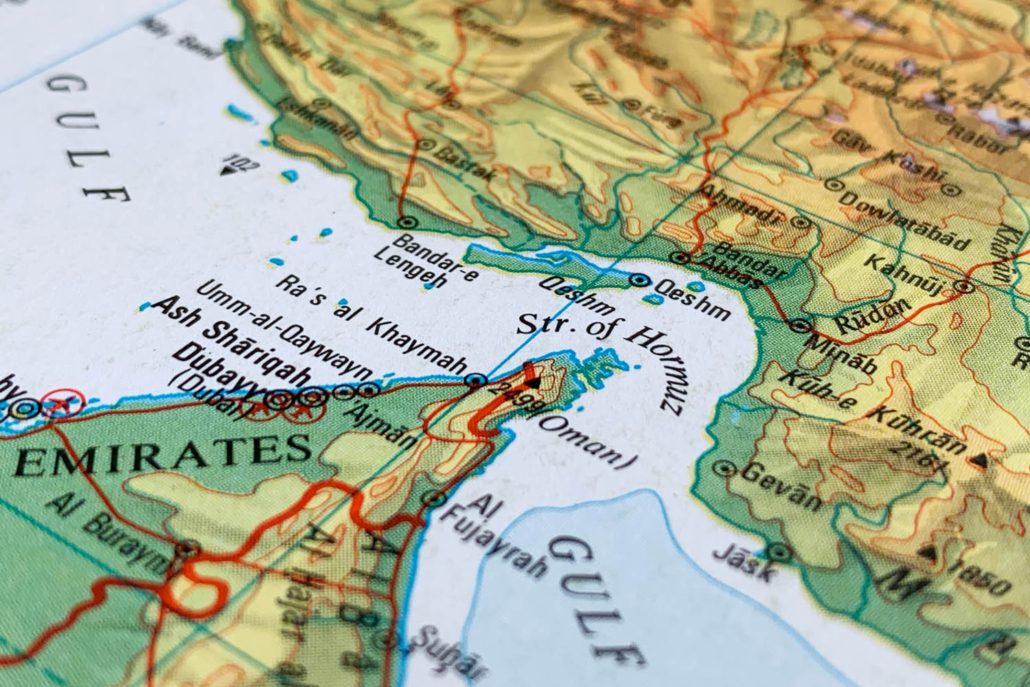
Global supply chains continue to face a mix of pricing shifts, infrastructure constraints, and geopolitical uncertainty. While certain cost pressures have eased in early 2026, underlying risks remain—particularly across energy markets, key shipping lanes, and critical manufacturing regions.
Understanding these developments is essential for manufacturers, importers, and life sciences companies navigating international logistics.
Freight Pricing Trends Show Mixed Signals
Recent data reflects a temporary softening in transportation costs, though volatility remains likely.
Airfreight: Short-Term Relief with Uncertainty Ahead
The airfreight price index declined 4.2% month-over-month in January and is down 2.4% year-over-year. This follows a period of elevated pricing driven by global disruptions and capacity constraints.
While this easing may provide short-term cost relief, pricing is expected to remain sensitive to geopolitical developments—particularly as global trade routes adjust in response to ongoing conflicts.
For shippers, this reinforces the importance of maintaining flexible airfreight strategies rather than relying on stable rate assumptions.
Ocean Freight: Stability with Emerging Risk Factors
Ocean freight pricing has remained relatively stable, with a modest 0.4% increase month-over-month and a 1.9% decline year-over-year.
However, this stability may not hold.
The closure of the Strait of Hormuz and continued disruptions to Red Sea transits are expected to influence pricing in the coming months. These events could tighten vessel capacity, extend transit times, and increase costs across key global trade lanes.
For organizations dependent on ocean freight, proactive routing strategies and contingency planning will be critical.
Warehousing: Continued Upward Pressure
Unlike transportation costs, warehousing prices continue to rise, increasing 3.1% month-over-month and 1.9% year-over-year.
One of the most significant drivers is the rapid expansion of cold chain infrastructure. Cold storage construction is projected to grow at a 20–25% compound annual growth rate through 2030, reflecting increased demand from pharmaceutical, biotech, and food supply chains.
At the same time, energy constraints—particularly electricity shortages—are slowing development, limiting available capacity in some regions.
This dynamic is especially relevant for life sciences companies requiring temperature-controlled storage, where demand continues to outpace supply.
Strait of Hormuz: A Critical Supply Chain Variable
One of the most significant developments impacting global supply chains is the disruption in the Strait of Hormuz, a key energy and shipping corridor.
The primary concern is not just the disruption itself—but its duration.
Short-term interruptions can often be absorbed through existing inventory levels. However, disruptions lasting 35 to 45 days or longer are expected to have broader consequences.
The Strait typically sees approximately 130 cargo vessels per day, representing roughly $128 billion in trade flows. Prolonged disruption at this scale has the potential to:
- Drive up global energy prices
- Disrupt raw material availability
- Extend lead times across multiple industries
Sectors most likely to feel the impact include:
- Semiconductor manufacturing
- Plastics and petrochemicals
- Agricultural supply chains
For manufacturers, this introduces both cost and availability risks that require close monitoring.
Asia: Ongoing Geopolitical Sensitivity
At the same time, supply chains in Asia remain under heightened scrutiny.
Recent developments—including military activity near Taiwan and North Korea—have introduced additional uncertainty into already complex regional dynamics.
The United States has also signaled that its strategic focus remains global, warning that geopolitical tensions are not limited to the Middle East.
For supply chains, the primary concern centers on semiconductor availability.
Even localized disruptions in Asia can have cascading effects across industries that depend on advanced components, including:
- Automotive manufacturing
- Consumer electronics
- Industrial equipment
Early indications suggest the potential for spot shortages, reinforcing the need for diversified sourcing strategies and inventory planning.
What This Means for Global Supply Chains
Taken together, these developments highlight a broader trend:
Supply chains are stabilizing in some areas while becoming more fragile in others.
Freight costs may be moderating in the short term, but structural risks remain tied to:
- Energy markets
- Geopolitical tensions
- Infrastructure constraints
- Critical material availability
For companies operating in global markets, success will depend on:
- Maintaining routing flexibility across modes and regions
- Monitoring geopolitical developments in real time
- Strengthening supplier diversification strategies
- Aligning logistics planning with inventory management
A Euro-American Worldwide Logistics Perspective
At Euro-American Worldwide Logistics, we view today’s environment as one that requires constant visibility, adaptability, and coordination.
Fluctuating freight rates, infrastructure limitations, and geopolitical risks are no longer isolated challenges—they are interconnected forces shaping global trade.
Our approach focuses on:
- Monitoring global trade developments and pricing trends
- Providing flexible logistics solutions across air, ocean, and ground
- Supporting clients with customs brokerage and compliance expertise
- Delivering temperature-controlled storage aligned with life sciences requirements
By integrating these capabilities, we help clients navigate uncertainty while maintaining control over their supply chains.
If your organization is navigating international supply chain volatility, evaluating routing strategies, or managing temperature-sensitive products, Euro-American Worldwide Logistics is ready to support you.
Our team provides integrated international logistics, customs brokerage, and cGMP-compliant storage solutions designed to help you maintain control, compliance, and continuity.
Contact Euro-American Worldwide Logistics today to discuss how we can strengthen your global supply chain strategy.

