
Air Cargo at 33% Above Year-Ago Rates: What Pharmaceutical Cold Chain Shippers Are Doing About It
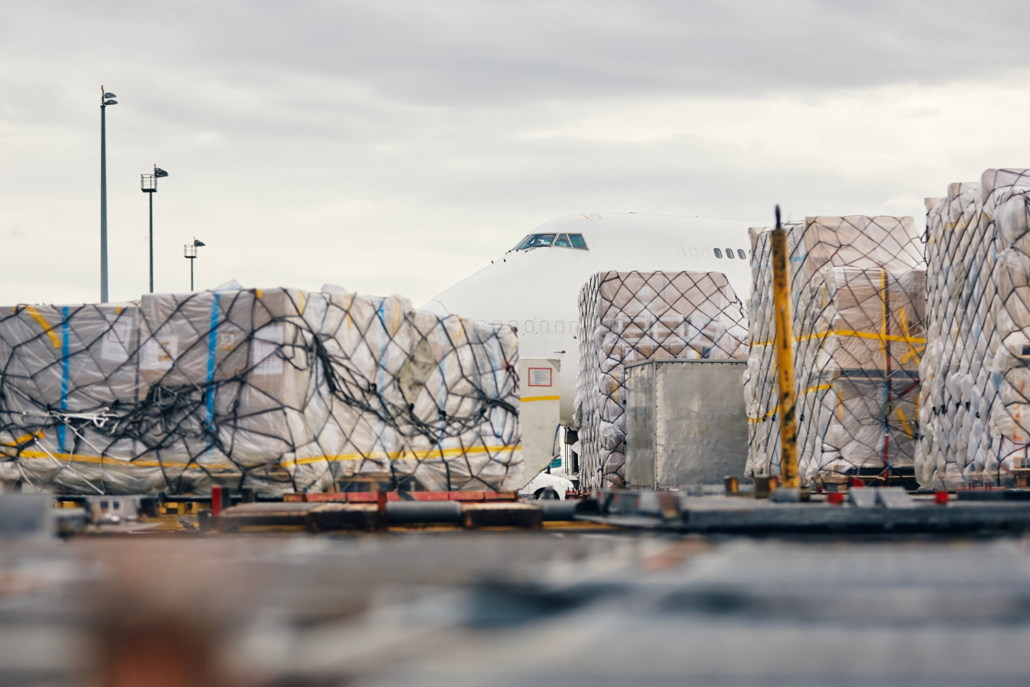
Air cargo rates have not normalized. According to the World ACD weekly air cargo report, global air cargo spot rates were running approximately 33% above year-ago levels through June 7, 2026, with sharper regional pressure on lanes most directly affected by the Middle East conflict. The Strait of Hormuz peace agreement, announced earlier this month, has set the stage for eventual normalization. The freight market is not there yet.
For pharmaceutical, biotech, and medical device shippers whose supply chains depend disproportionately on air freight for temperature-sensitive and time-critical product, the rate environment continues to require operational discipline. This article looks at where rates stand, why they remain elevated even as the conflict winds down, and what life sciences shippers are doing to manage it.
Where Air Cargo Rates Stand: A Regional Snapshot
| Region/Lane | Rate Y/Y | Context |
|---|---|---|
| Worldwide average | +33% | Through June 7, 2026; total tonnage up 3% |
| Middle East & South Asia | +53% | Most acute regional pressure; lanes from India and Gulf directly affected |
| Asia Pacific | +32% | Includes ocean-to-air mode shifts; pharma corridors heavily affected |
| Europe | +32% | Affected by jet fuel constraints and aircraft repositioning |
| North America (inbound) | +26% | Inbound pressure from elevated origin-market rates |
| Africa | +45% | Less commonly tracked but materially affected |
The pattern is consistent: rates are elevated globally, with the most acute pressure on lanes most directly affected by the Middle East disruption. The 53% Y/Y increase on Middle East and South Asia lanes is particularly significant for pharmaceutical importers, since India, the destination most U.S. pharmaceutical importers are diversifying toward, sits squarely in that affected region.
Why Rates Remain Elevated Even as the Conflict Winds Down
Several factors are keeping air cargo rates elevated even as the immediate military disruption resolves:
Jet Fuel Supply Has Not Normalized
Bunker fuel rates were up an additional 51% year-over-year as of the most recent reporting, reflecting the broader Middle East energy disruption working through global supply. Jet fuel availability in the Asia-Pacific region remains constrained as supply chains rebuild. Until fuel supply normalizes, the structural cost basis for air freight remains elevated.
Aircraft and Crew Repositioning
When global air routes are disrupted, returning to normal operations requires more than a peace announcement. Aircraft positioning, crew scheduling, maintenance cycles, and slot allocations at affected airports all need to rebuild. The operational lag between policy resolution and freight market normalization is typically measured in weeks to months, not days.
Ocean-to-Air Mode Shifts
Shippers who moved volume from ocean to air during the disruption have not all moved back. For time-sensitive and high-value cargo, including most pharmaceutical product, the operational benefits of air freight justify continued use even after ocean lanes stabilize. Sustained air freight demand keeps capacity tight.
Sourcing Diversification Effects
As U.S. importers expand sourcing from India, Vietnam, and other Asia-Pacific destinations, more cargo moves by air on lanes that were less utilized historically. The demand profile of air freight has shifted alongside the sourcing patterns it serves.
The Hormuz peace agreement is necessary for normalization but not sufficient. The freight market is in transition; the new equilibrium has not yet been established.
Why Pharmaceutical Supply Chains Are Disproportionately Affected
Life sciences supply chains depend on air freight more heavily than most industries. Biologics, monoclonal antibodies, vaccines, GLP-1 therapies, investigational clinical materials, temperature-sensitive APIs, and medical devices all rely on air transit for the speed and reliability that ocean cannot provide. When air cargo rates rise by a third, and significantly more on key pharma lanes, the effect on landed cost and operational planning is direct and significant.
Specific operational pressures pharmaceutical shippers are managing right now:
- Cold chain shipments face elevated rates of 26–53% Y/Y depending on origin region, with the largest increases on the lanes most heavily used for pharma imports from India and Asia
- Specialty cold chain freighter capacity remains tight as airlines continue to prioritize higher-yielding general air cargo on constrained networks
- Bunker fuel surcharges are still rising across all modes, with the 51% Y/Y bunker fuel increase reported in DHL’s recent monthly report continuing to feed into rate structures
- Booking lead times remain extended at major Asian airports as the air freight network rebalances
- Pharma corridor specialization is becoming more important with certain carriers building stronger pharma-handling capabilities than others, carrier selection matters more than it did pre-conflict
What Pharmaceutical Shippers Are Doing About It
Blended Ocean-Air Strategies
The shippers handling the current environment best are not moving entirely to air or remaining entirely on ocean. They are running blended strategies, moving time-critical and temperature-sensitive product by air while accepting longer ocean transits for lower-priority inventory. Building flexibility into mode selection by SKU is the operational baseline rather than treating mode as a fixed assumption.
Earlier Booking Windows
Air freight capacity at major Asian and Middle Eastern origins remains booked further out than pre-conflict norms. Shippers expecting last-minute capacity availability are finding none. The companies maintaining service continuity are booking earlier, accepting tentative scheduling adjustments, and building longer planning windows into procurement decisions.
Carrier Diversification
Companies whose air freight programs ran through a single primary carrier are qualifying secondary carriers as backup capacity. With flight cancellations rising in fuel-constrained regions and capacity booked out at primary airlines, having pre-qualified alternative routing has become essential rather than optional.
Integrated Customs and Cold Chain Planning
With every air freight movement now more expensive, the cost of a customs clearance delay has risen sharply. A 24-hour customs hold on a refrigerated biologic is not a paperwork problem, it is a stability event. Pharmaceutical shippers are increasingly insisting that their freight forwarder, customs broker, and cold chain warehouse coordinate in real time. The integration that was a nice-to-have in stable markets is operationally necessary in this one.
Updated Landed Cost Models
Companies whose landed cost models still reflect pre-conflict freight assumptions are operating on stale data. Updating freight cost assumptions, surcharge expectations, and lead time buffers is necessary for accurate pricing and procurement decisions.
The Outlook
Air cargo rates will normalize over time. The Hormuz peace agreement, if it holds, removes the major catalyst for the current disruption. But the path back to pre-conflict rate levels is likely to be slower than the path that created the current environment. Aircraft repositioning, fuel supply normalization, and the rebalancing of ocean vs. air mode shares all take time.
For pharmaceutical shippers, planning around the assumption of slow rate normalization through the remainder of 2026 is reasonable. Planning around any specific date or level is not. The companies best positioned will be those who treat freight cost as a variable to manage, not a fixed assumption to absorb.
How Euro-American Worldwide Logistics Supports Pharmaceutical Air Freight
Euro-American Worldwide Logistics operates air freight forwarding from both Worcester Regional Airport and Logan International Airport, providing dual-gateway access that enables routing flexibility when one airport faces capacity constraints. Our international agent network supports air freight movements worldwide, with established carrier relationships across the major pharma corridors.
Our integrated cGMP-compliant warehouse and in-house licensed U.S. Customs Brokerage operate from the same facility, which means international pharmaceutical shipments arriving by air move directly from CBP release into validated temperature-controlled storage, without the vendor handoff that turns a customs delay into a cold chain event.
For questions about air freight options for time-sensitive pharmaceutical and life sciences shipments, contact our team.
Sources include the LogisticsPULSE June 2026 Executive Briefing; World ACD Weekly Air Cargo Trends Report through June 7, 2026; and DHL Global Forwarding OFR Market Update June 2026.

