
Future-Proofing Your Pharmaceutical Cold Chain
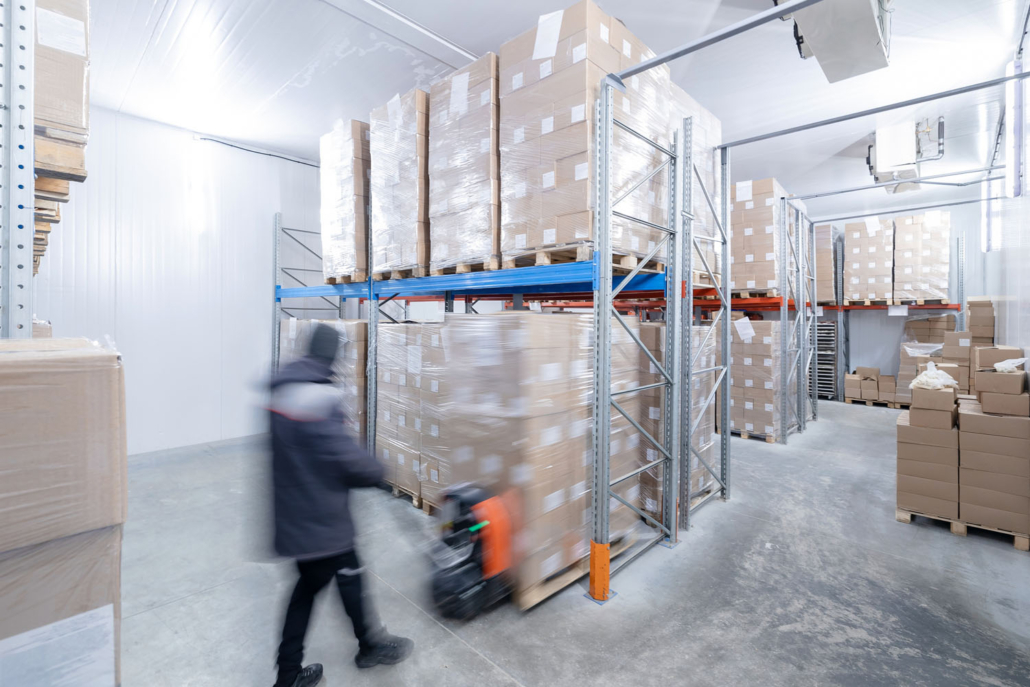
Building a Compliant, Scalable Cold Chain from Clinical to Commercial
The pharmaceutical cold chain has never been more demanding. Biologics, monoclonal antibodies, GLP-1 therapies, and an expanding pipeline of temperature-sensitive products are placing requirements on cold chain infrastructure that far exceed what was standard a decade ago. The products are more complex, the regulatory expectations are higher, and the consequences of a cold chain failure — excursion, product loss, regulatory action — have never been more severe.
This report addresses what it takes to build a pharmaceutical cold chain that is compliant today and scalable through commercial growth — and where the gaps most commonly appear.
The Cost of Getting It Wrong
An estimated 20% of temperature-sensitive healthcare products are damaged or degraded during distribution — not because of product failures, but because of cold chain failures. The financial cost is significant. For high-value biologics, a single batch loss can represent hundreds of thousands of dollars. For personalized therapies and investigational products, the consequences extend beyond product replacement.
What makes pharmaceutical cold chain failures particularly costly is where they tend to occur: not within a single provider’s operation, but at the handoffs between providers. Between the international freight forwarder and the customs broker. Between customs clearance and the warehouse. Between the warehouse and the final-mile carrier.
Every gap between vendors is a gap in accountability — and a gap in the temperature record. A customs hold of 48 or 72 hours on a refrigerated shipment is not just a delay. Depending on the product’s stability profile and the packaging system’s validated hold time, it may be a product loss event. Yet most importers manage their freight forwarder and their customs broker as separate relationships, with no single party owning the temperature record across the clearance process.
The most preventable cold chain failures are not the dramatic ones. They are the quiet accumulation of uncontrolled handoffs between vendors who each own their segment and nobody owns the gaps between them.
What a Resilient Cold Chain Actually Requires
Validated Temperature Control
The temperature requirements of modern pharmaceutical products span a defined spectrum. The ranges most commonly required across pharmaceutical and biotech supply chains are:
- Controlled Room Temperature (15–25°C): standard for many finished drug products, APIs, and medical devices
- Refrigerated (2–8°C): required for biologics, vaccines, insulin, most monoclonal antibodies, and GLP-1 therapies
- Frozen (-20°C): required for certain biologics, vaccines, and research materials
A 3PL that can only offer one or two validated temperature ranges becomes a constraint as a product portfolio grows. Validated storage is not just about having refrigeration — it requires documented qualification of each zone, calibrated monitoring equipment, defined alarm thresholds, and a written response protocol for any deviation.
Continuous Monitoring and Documented Response
Temperature monitoring is not a passive function. It requires continuous data logging, immediate alert capability, and the ability to produce a complete, unbroken temperature record for any shipment or storage event on demand. For pharmaceutical companies operating under FDA oversight, this documentation is evidence — evidence that the cold chain performed as required and that any deviation was identified, assessed, and resolved through a documented CAPA process.
The distinction between a temperature excursion and a reportable deviation often comes down to how quickly the event was detected and how completely it was documented. Real-time monitoring with immediate alerts is not a feature — it is a regulatory expectation.
Compliance That Extends Through Import and Transport
A cold chain that is cGMP-compliant in the warehouse but uncontrolled during customs clearance or domestic transport is not a cold chain. It is a compliant segment surrounded by risk.
For pharmaceutical companies importing temperature-sensitive product from international manufacturers — the majority of biologics and APIs in the U.S. market — the customs clearance process is one of the most significant cold chain risk points in the supply chain. The only structural solution is to ensure that the party clearing customs and the party receiving the product into controlled storage are not operating as separate vendors, but as an integrated team with shared accountability for the temperature record.
Scalability from Clinical to Commercial
The choice of logistics partner at the clinical stage carries more weight than most companies recognize at the time they make it. A provider whose quality systems, facility capabilities, and distribution infrastructure already meet commercial-scale FDA requirements eliminates a significant operational and regulatory transition when approval comes. The product moves from clinical to commercial storage within the same validated environment, under the same quality system, without requalification.
That continuity is not just operationally convenient. It maintains documentation continuity, preserves the compliance record, and reduces the risk of introducing new variables into the supply chain during the highest-stakes period of a product’s commercial lifecycle.
Cold Chain Capability: What to Look For in a 3PL Partner
| Capability | Why It Matters |
|---|---|
| FDA Registered Facility | Mandatory for pharmaceutical and biotech importers requiring GMP-compliant third-party storage |
| Validated 2–8°C Refrigerated Storage | Required for biologics, vaccines, monoclonal antibodies, and most temperature-sensitive drug products |
| Validated 15–25°C Ambient Storage | Required for APIs, finished drug products, and medical devices with controlled room temperature specifications |
| 24/7 Temperature Monitoring & Alerts | Real-time excursion detection with documented response — the difference between a recoverable deviation and product loss |
| ISO-9001 Certified Quality System | Auditable documentation framework required for regulated product handling and FDA inspection readiness |
| CTPAT-Certified Security | Continuous 24/7 video monitoring for high-value pharmaceutical and medical device inventory |
| In-House U.S. Customs Brokerage | Eliminates clearance delays that threaten cold chain integrity for internationally sourced products |
| GxP-Compliant Transportation | Temperature-controlled handling maintained from international origin through final domestic delivery |
| Chain-of-Custody Documentation | Unbroken traceability across all legs of the supply chain — from overseas shipment through warehouse receipt and final delivery |
Bridging Clinical and Commercial: The Continuity Advantage
In many organizations, the transition from clinical supply chains to commercial distribution is one of the most logistically disruptive events in a product’s lifecycle. Trial logistics vendors often lack the scale or regulatory infrastructure required for national commercial distribution. Large commercial distributors that don’t specialize in regulated pharmaceuticals may lack the documentation rigor and handling precision that early-phase clinical operations require.
An integrated cold chain model — where one partner manages clinical material storage, just-in-time site distribution, and commercial-scale warehousing and fulfillment from the same validated facility — eliminates that transition risk. There are no new vendor qualifications, no gaps in the chain-of-custody record, and no period of supply chain uncertainty while the commercial logistics infrastructure is being stood up.
The questions worth asking when evaluating a cold chain partner for clinical-stage work are the same questions worth asking for commercial distribution: Is the facility FDA registered? Are the temperature zones validated and continuously monitored? Does the quality system meet cGMP requirements? Is there in-house customs brokerage capability for internationally sourced product? If those boxes are checked at the clinical stage, the commercial transition becomes a volume increase rather than an infrastructure overhaul.
How Euro-American Worldwide Logistics Supports the Pharmaceutical Cold Chain
Euro-American Worldwide Logistics operates a 45,000 square foot FDA registered, cGMP-compliant 3PL facility in Worcester, Massachusetts — 40 miles west of Boston, adjacent to Worcester Regional Airport, and at the center of one of the world’s most concentrated life sciences ecosystems.
Our cold chain capabilities include validated 2–8°C and 15–25°C storage across 25,000 square feet of temperature-controlled space, 24/7 monitoring with real-time alert systems, ISO-9001 certified quality controls, and CTPAT-certified security throughout the facility. Our in-house licensed U.S. Customs Brokerage team operates within the same facility as our warehouse — so internationally sourced pharmaceutical product moves directly from CBP clearance into controlled temperature storage without a vendor handoff or a gap in the temperature record.
We also provide GxP-compliant air and ocean freight forwarding through Worcester Regional Airport and Logan International, domestic distribution throughout the Northeast, and full chain-of-custody documentation from international origin through final delivery.
For pharmaceutical, biotech, and medical device companies that need a logistics partner capable of supporting their supply chain from first import through commercial scale — we are ready to talk. Contact us today.

