
India’s Emergence as the Leading Pharmaceutical Sourcing Alternative: What Life Sciences Importers Need to Know in 2026
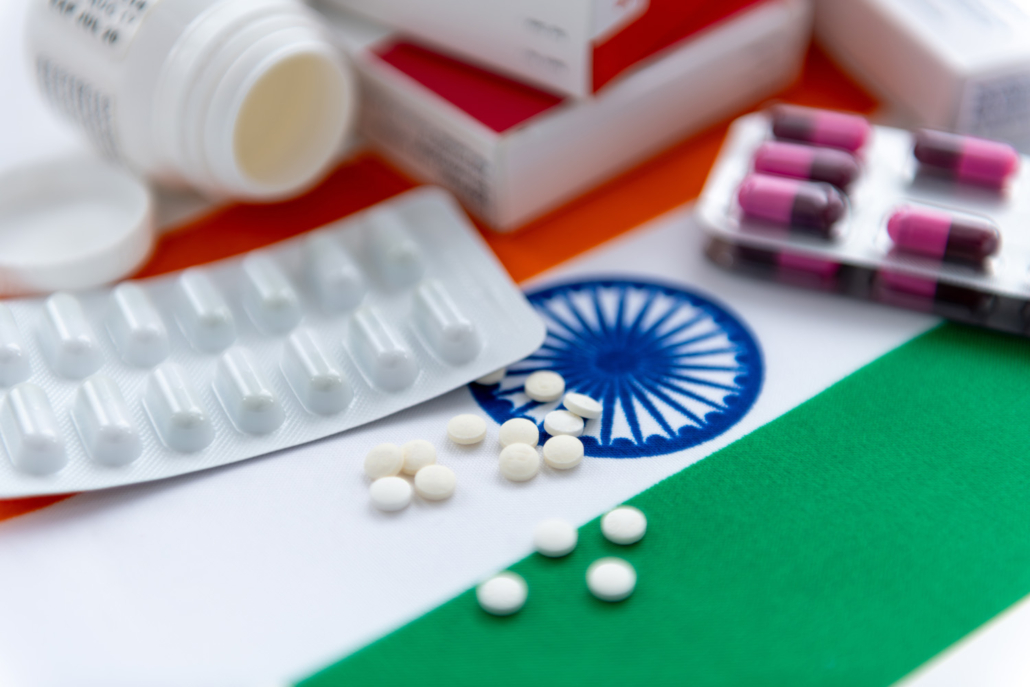
The pharmaceutical industry’s effort to diversify sourcing away from China has matured. According to recent industry data, nearly 79% of companies have moved at least some sourcing volume away from China, and India has emerged as the leading destination, particularly for life sciences. The Indian government’s PLI schemes, the country’s USFDA-compliant manufacturing base, and an established pharmaceutical export ecosystem of more than $30 billion annually have created a real alternative for U.S. importers seeking diversification.
But the more interesting question, and the one most worth understanding before placing strategic supply chain bets on India, is what the diversification actually accomplishes. India is the clearest alternative to direct Chinese pharmaceutical sourcing. It is not, yet, an independent alternative. The upstream picture matters, and importers who understand it are better positioned than those who treat India as a fully decoupled sourcing solution.
Why India Is the Default Destination for Pharmaceutical Diversification
Several structural factors have made India the dominant beneficiary of pharmaceutical sourcing diversification away from China:
Manufacturing Scale and Regulatory Standing
India operates the largest USFDA-compliant pharmaceutical manufacturing base outside the United States. Indian pharmaceutical exports reached approximately $30.47 billion in fiscal year 2025, with the industry producing nearly one-fifth of the world’s generic medicines by volume. The country manufactures across virtually every therapeutic category, cardiovascular, oncology, anti-infectives, diabetes, CNS, respiratory, generics, biosimilars, and vaccines.
For U.S. importers, the practical implication is that the Indian pharmaceutical industry has both the scale and the regulatory infrastructure to absorb meaningful sourcing volume. Unlike emerging destinations where capacity must be built from scratch, India’s manufacturing base is already operating at scale and already certified to U.S. regulatory standards across hundreds of facilities.
Government Investment and Policy Support
The Indian government has deployed significant policy support for pharmaceutical manufacturing through Production-Linked Incentive (PLI) schemes. Approximately $3 billion has been allocated to pharmaceuticals and medical devices, with an additional ~$830 million targeting 41 critical APIs that India had been importing heavily from China, including antibiotics, vitamins, analgesics, cardiovascular APIs, and fermentation-based molecules. The objective is explicit: reduce Indian dependence on Chinese inputs while building manufacturing capacity that international buyers can use.
Cost and Workforce Advantages
Indian pharmaceutical manufacturing maintains meaningful cost advantages over Western producers, supported by a large, skilled workforce in pharmaceutical sciences. Combined with a deepening regulatory infrastructure and active government support, the economics for international buyers remain attractive even as labor costs in India gradually rise.
From the perspective of U.S. importers seeking to diversify pharmaceutical sourcing away from China, India is the clearest alternative, not because it is upstream-independent, but because it offers the scale, regulatory standing, and manufacturing breadth that no other single country can match.
The Critical Nuance: India’s China Dependence
The most consequential fact for U.S. importers evaluating India as a sourcing destination is one that does not show up in the headline export numbers. According to industry analyses, India still imports approximately 65–70% of its key starting materials (KSMs) and bulk drug intermediates from China. Some analyses estimate that Chinese effective control over the U.S. generic supply chain, accounting for the molecular passport of every API, not just direct shipments, may be closer to 80%.
In practice, this means that an API marked “manufactured in India” was likely produced from intermediates that originated in China. The Indian facility performs the final chemical synthesis, regulatory documentation, and shipment to the United States, but the underlying chemistry traces back upstream.
This is not a problem India is unaware of, the PLI scheme targeting 41 critical APIs is explicitly designed to address it. Indian companies are investing in upstream KSM capacity, and the policy environment is supporting that buildout. But the transition will take years, and during that transition, U.S. importers sourcing from India should understand what they are and are not buying.
What This Means in Practice
For U.S. importers, the China-content question becomes operationally important in several scenarios:
- BIOSECURE Act compliance: If any upstream Chinese supplier in your API’s synthesis chain becomes designated as a biotechnology company of concern, your Indian-origin API may face downstream restrictions.
- Country of origin determinations: CBP’s substantial transformation rules generally treat the final API synthesis location as the country of origin, but classification questions arise particularly for intermediates and complex molecules.
- Section 232 pharmaceutical tariffs: Indian patented imports do not receive country-of-origin preferential rates the way EU, Japan, South Korea, and Switzerland imports do, the standard 100% rate applies absent an onshoring agreement.
- FDA inspection history: The 2025 surge in FDA data integrity enforcement increased the importance of supplier audit history and inspection track record for any Indian manufacturer.
India as a Pharmaceutical Sourcing Destination: At a Glance
| Category | What Importers Should Know |
|---|---|
| Strengths to leverage | Largest USFDA-compliant manufacturing base outside the U.S.; ~$30B+ in pharma exports; broad therapeutic coverage including biosimilars and complex generics |
| Production-Linked Incentive (PLI) schemes, ~$3B in pharma/medical device incentives and ~$830M targeting 41 critical APIs previously imported from China | |
| Indian API industry projected to grow 7–8% CAGR through 2029, driven by global supply chain diversification | |
| Risks to manage | India still imports approximately 65–70% of its KSMs and bulk drug intermediates from China, the upstream supply chain is not yet independent |
| FDA data integrity enforcement intensified in 2025; supplier audits and inspection history matter more than ever | |
| Section 232 pharmaceutical tariffs treat Indian patented imports the same as those from any other non-preferential country, 100% rate without an onshoring agreement |
Practical Guidance for U.S. Importers
For life sciences companies evaluating or expanding Indian pharmaceutical sourcing, several operational priorities are worth establishing early:
1. Conduct Substantive Supplier Due Diligence
FDA inspection history, GMP audit results, recent 483 observations, and data integrity track record matter more than they did three years ago. The 2025 enforcement environment is materially stricter than previous years. Suppliers without recent successful inspection history carry elevated risk, regardless of country.
2. Understand Your Upstream Supply Chain
Ask Indian suppliers where their KSMs and intermediates come from. The answer may not change your sourcing decision, but it should inform your risk modeling, your BIOSECURE Act exposure assessment, and your supply continuity planning. Suppliers who cannot or will not provide this information should be considered carefully.
3. Build in Customs and Regulatory Capacity
Indian pharmaceutical imports require careful HTSUS classification, FDA Prior Notice where applicable, and documentation that supports both CBP entry and FDA compliance simultaneously. Importers who treated their previous Chinese sourcing as routine often need to upgrade their customs and regulatory infrastructure when transitioning to Indian sourcing.
4. Plan for Air Freight Capacity
Pharmaceutical shipments from India typically move by air, and air cargo rates remain elevated in 2026, particularly on Middle East and South Asia lanes, where rates are running approximately 53% above year-ago levels. Lane-specific freight cost should be factored into landed cost modeling rather than estimated from historical averages.
5. Maintain Multi-Source Optionality
The most sophisticated importers are not consolidating all of their China-displaced volume into India. They are building portfolios across India, multiple European producers, and where appropriate, U.S.-based CDMOs supported by onshoring incentives. Concentration risk in any single country, even one as strategically important as India, is its own form of supply chain vulnerability.
How Euro-American Worldwide Logistics Supports Pharmaceutical Sourcing Diversification
Euro-American Worldwide Logistics works extensively with pharmaceutical, biotech, and medical device companies whose supply chains are restructuring around current trade policy, FDA enforcement, and sourcing diversification trends. Our integrated platform combines licensed U.S. Customs Brokerage, international freight forwarding (air and ocean), and cGMP-compliant warehousing under one roof in Worcester, Massachusetts. This integration supports the kinds of operational transitions that India sourcing requires.
Our customs brokerage team handles HTSUS classification, country of origin determinations, and FDA-coordinated entry filings for pharmaceutical and biotech imports as a routine part of our work. Our integrated warehouse provides validated cold chain and controlled-room-temperature storage for incoming pharmaceutical product, with the documentation and chain-of-custody infrastructure life sciences clients require.
For questions about Indian pharmaceutical sourcing, customs compliance, or integrated logistics support for life sciences supply chains, contact us today.
Sources include the LogisticsPULSE June 2026 Executive Briefing; Bain & Company “Healing the World” report; ICRA Indian API industry analysis; ORF analysis of China-India pharmaceutical trade dependencies; Quality Matters / U.S. Pharmacopeia; and DrugPatentWatch 2026 China API analysis.

