
The Connected 3PL: Why Warehouse, Transportation, and Customs Data Should Tell the Same Story
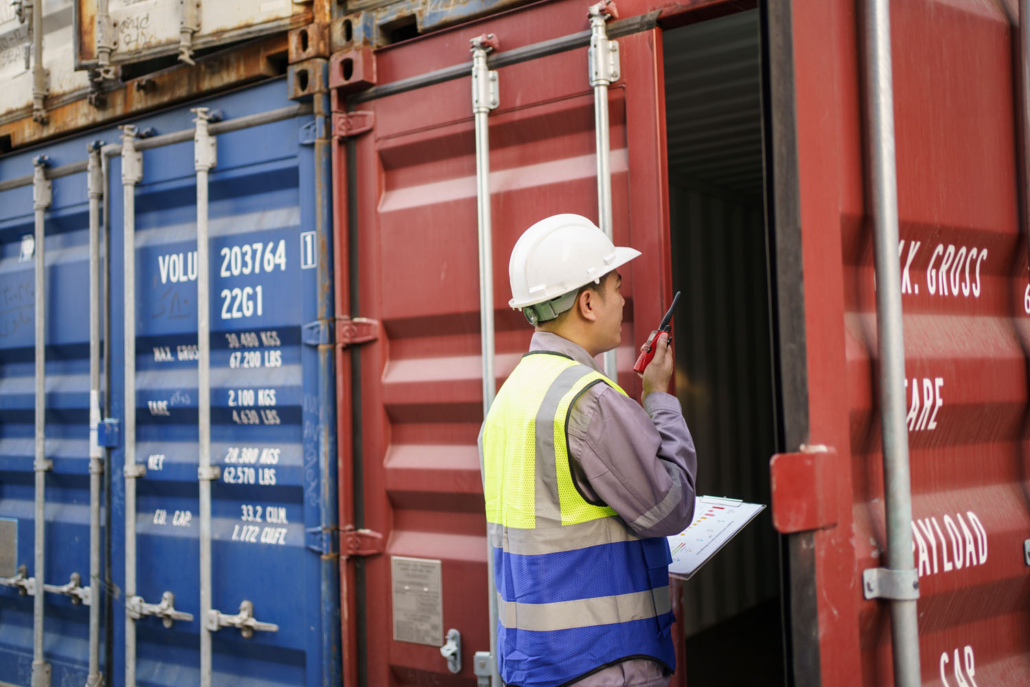
In early September 2026, logistics technology company Descartes acquired Extensiv, a provider of warehouse-management and fulfillment technology for third-party logistics providers, for approximately $120 million. Descartes framed the deal as expanding its warehouse and inventory capabilities and connecting them more closely with its existing transportation management, shipment visibility, trade intelligence, customs compliance, and last-mile tools. It followed the company’s August acquisition of a transportation-management provider.
This is not a pharmaceutical deal, and there is no reason to treat it as one. But it is a clear signal of a broader trend in the logistics industry, one that matters a great deal for regulated products: warehouse operations, transportation, and customs data are increasingly being connected into a single technology ecosystem. The industry is investing heavily to make these functions speak to each other, because the value of connecting them has become obvious.
For regulated products, connected data is not a convenience. It is a compliance requirement. A GMP warehouse cannot operate as an information island, because the questions regulators and clients ask about a pharmaceutical shipment cross the boundaries between warehouse, transportation, and customs.
Why Information Islands Fail Regulated Products
Consider a simple question a client or a regulator might ask about a specific pharmaceutical shipment: did this lot remain within its required temperature range from the moment it cleared customs until it shipped to the customer? Answering that question requires customs data (when did it clear), warehouse data (when was it received, where was it stored, what was its release status), monitoring data (was there any excursion), and shipment data (when did it leave, where did it go). If those four data sets live in separate systems that do not connect, assembling the answer is slow, manual, and error-prone, and in a regulated industry, an answer that is slow and manual is a liability.
When warehouse, transportation, and customs data are disconnected, the failures are predictable. The warehouse does not know a shipment is held at customs until it fails to arrive. Customer service cannot see whether product is released or quarantined. Customs has product data that does not match what is physically in the warehouse. An excursion event is recorded in one system but not linked to the lots it affected. Each of these is a gap where compliance can break down and where a client’s confidence erodes.
The connected alternative is straightforward to describe, even if it takes real work to build. The warehouse knows every shipment’s customs status. Operations know whether product is released or quarantined. Customer service sees accurate inventory and shipment status. Customs has product data that matches reality. And exception information, a hold, an excursion, a delay, flows across the whole chain so that everyone who needs to act on it can. The functions tell the same story because they draw on the same data.
Ten Data Domains That Should Tell One Story
A genuinely connected 3PL operation aligns a specific set of data domains so that warehouse, transportation, customs, and customer-facing functions all work from consistent information. For regulated products, these ten are the ones that matter most.
| Data Domain | Why It Has to Connect |
|---|---|
| Master product data | The single accurate definition of what each product is, shared across every function |
| HTS classification | The customs classification that determines duty, and that must match the product actually stored and shipped |
| Lot information | Batch and lot identity, essential for traceability, recalls, and expiry management |
| Customs entry status | Whether a shipment is cleared, held, or pending, visible to the warehouse that will receive it |
| Warehouse inventory | What is physically on hand, where, and in what condition |
| Product release status | Whether product is quarantined, released, or rejected, enforced across the system |
| Shipment visibility | Where product is in transit, inbound and outbound |
| Temperature excursions | Any deviation event, linked to the specific lot and shipment it affected |
| Audit trail | The complete, retrievable record of what happened to each unit at each step |
| Customer reporting | A single accurate view the client can see, matching what every internal function sees |
The point is not that each of these data domains exists somewhere. In most operations they do. The point is whether they connect, whether the HTS classification the customs team uses matches the master product data the warehouse works from, whether the release status the quality team sets is the same status customer service sees, whether an excursion event is linked to the specific lot and shipment it touched. Connection is what turns ten separate records into one coherent story about a product.
The Connections That Matter Most for Regulated Product
Product Data, Classification, and What Is Physically Stored
Master product data, HTS classification, and warehouse inventory have to describe the same thing. When the customs entry classifies a product one way and the warehouse holds it under a different description or specification, the mismatch is exactly the kind of discrepancy a CBP or FDA review surfaces. Connected data means the definition of the product is consistent from the customs entry through the warehouse shelf.
Customs Status and Warehouse Receiving
The link between customs entry status and warehouse operations is one of the highest-value connections for imported regulated product. When the warehouse can see that a shipment is cleared, held, or pending, it can plan receiving, arrange controlled storage for a delayed shipment, and avoid the blind spot where product is cleared but no one has told the warehouse to expect it. This connection is precisely why integrated customs brokerage and warehousing is so valuable for pharmaceutical importers.
Release Status and Everything Downstream
Product release status, quarantined, released, or rejected, has to be enforced across the system, not held in one person’s knowledge or one team’s spreadsheet. If the quality team quarantines a lot, that status must prevent the product from being picked and shipped, must be visible to customer service, and must be part of the audit trail. A disconnect here is how quarantined product ships by mistake, which is among the more serious failures a regulated operation can have.
Excursions, Lots, and the Audit Trail
A temperature excursion is only meaningful if it is linked to the specific lots and shipments it affected. An excursion event floating in a monitoring system, unconnected to the product it touched, cannot support a sound disposition decision. Connected data ties the excursion to the lot, the lot to the shipment, and all of it to a complete, retrievable audit trail, so that when a question arises about a specific product, the full history is available in one place.
The Client Should See What You See
One of the clearest tests of a connected 3PL is whether the client’s view matches the internal view. When customer reporting draws on the same data as warehouse operations, customs, and quality, the client sees accurate inventory, real shipment status, and true release status, the same reality the provider’s own teams are working from. When customer reporting is a separate, manually assembled view, it drifts from reality, and the gaps show up at the worst times.
For a regulated products client, this transparency is part of the trust that the relationship depends on. The client retains accountability to FDA for their product. Giving them accurate, real-time visibility into its status, drawn from the same connected data the provider uses, is how a logistics partner supports that accountability rather than obscuring it.
How Euro-American Worldwide Logistics Approaches Connected Data
Euro-American Worldwide Logistics operates with a structural advantage in connecting this data: our licensed U.S. Customs Brokerage and our cGMP warehouse operate as one team, in one facility. The customs status of an imported shipment and the warehouse that will receive it are not separate companies exchanging information across a gap. They are the same operation, which means customs status, receiving, inventory, release status, and shipment visibility are coordinated rather than reconciled after the fact.
We offer flexible inventory control that works through our own warehouse management system or integrates with a client’s internal system, with real-time updates and immediate alerts, so clients see accurate, current information rather than a manually assembled snapshot. As the broader logistics industry invests in connecting warehouse, transportation, and customs data, we continue to invest in making sure that, for the regulated products we handle, those functions genuinely tell the same story.
If you want a logistics partner whose customs, warehouse, and shipment data work as a connected whole rather than as separate islands, contact our team today.
The Descartes acquisition of Extensiv referenced in this article was announced in early September 2026. This article is an industry perspective provided for informational purposes.
