
China’s Strategic Role in Global Trade and Supply Chains: 2025 Outlook
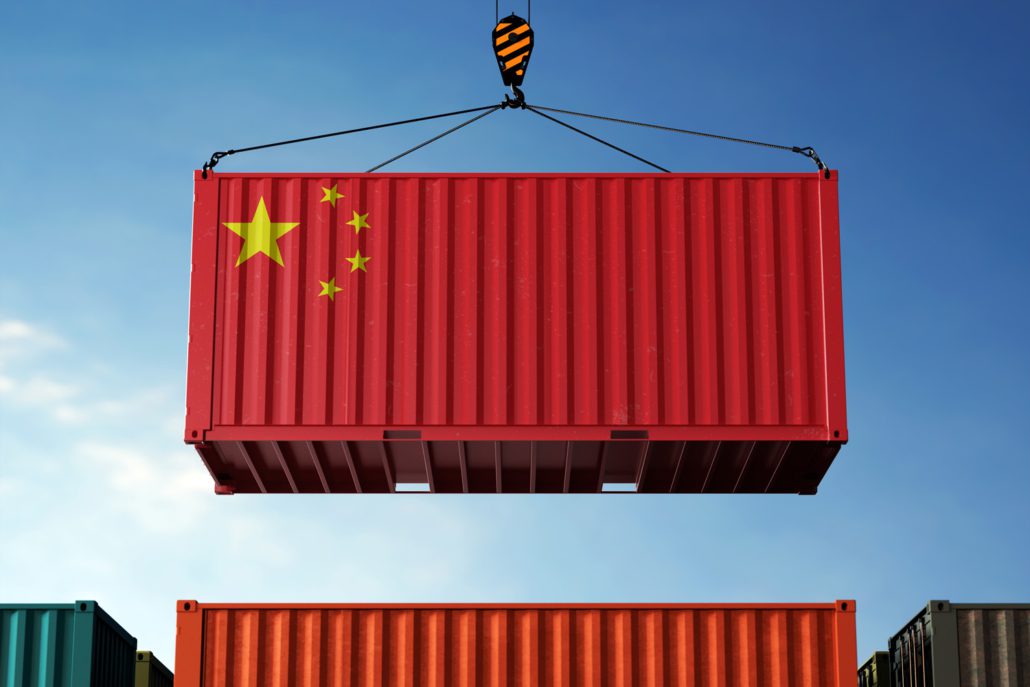
Special Area of Focus: China
China’s influence on global commerce remains unmatched in scale and complexity. As the world’s second-largest economy and the largest trading nation, the country continues to shape manufacturing strategy, international logistics, technology development, and supply chain decision-making across industries. For companies importing or exporting through China in 2025, understanding China’s trade structure, economic trends, and sector strengths is essential for accurate planning and resilient supply chain management.
China’s Economic Position in 2025
China entered 2025 with renewed momentum. Nominal GDP reached approximately $19.4 trillion, solidifying China’s position as the second-largest economy after the United States. The economy grew an estimated 4.8% year-over-year, supported by gradually recovering consumer demand, increased industrial output, and steady export performance despite continued tariff regimes from major trading partners.
China also remains Asia’s largest economy and one of the strongest contributors to global GDP expansion. Its influence extends deeply into manufacturing, energy transition technologies, and international logistics capacity.
Trade Volumes and Global Integration
China’s external trade activity continues to dominate global markets. In the first half of 2025:
- Total goods trade exceeded $3.2 trillion, up 7.4% year-over-year
- Exports totaled $1.85 trillion (57.8% of total trade)
- Imports reached $1.35 trillion (42.2%)
This level of throughput reinforces China’s pivotal role in global sourcing, production networks, and maritime shipping flows.
Key Export Categories
China remains a powerhouse in technology-driven manufacturing and consumer goods. Leading export categories in 2025 include:
- Electronics and electrical equipment – over 30% of total exports
- Machinery and mechanical equipment
- Vehicles and automotive components
- Green technologies, including electric vehicles (EVs), solar modules, batteries, and energy-storage systems
- Textiles, apparel, and furniture
- General consumer goods, toys, and appliances
China’s growing dominance in EVs, solar panels, lithium battery production, and related supply chains reflects the country’s long-term industrial strategy around renewable energy and green manufacturing.
Key Import Categories
China’s import structure highlights the country’s dependence on foreign technological inputs and energy resources. Major imports include:
- Integrated circuits and semiconductors – approximately $228 billion
- Crude oil – roughly $171 billion
- Agricultural products, soybeans, grains, and meat
- Automobiles and premium vehicles
- Advanced machinery and industrial components
Semiconductor imports remain particularly critical, as China continues to invest heavily in domestic chipmaking capabilities while still relying on overseas suppliers for high-end chips.
U.S.–China Trade Relationship
Despite ongoing geopolitical tensions, tariff policies, and regulatory disputes, the United States and China remain deeply economically intertwined. In 2024, goods trade between the two nations totaled approximately $582 billion:
- $438.7 billion in U.S. imports from China
- $143.2 billion in U.S. exports to China
China continues to rank among America’s top three trading partners, highlighting the structural importance of China-based manufacturing to U.S. consumers, distributors, and industrial supply chains.
The main U.S. imports from China include:
- Consumer electronics
- Computers and components
- Machinery and equipment
- Fast-moving consumer goods
- EVs and renewable energy components
Meanwhile, U.S. exports to China primarily consist of:
- Agricultural commodities
- Aircraft and aerospace parts
- Semiconductors
- Industrial machinery
- Energy products
While policy tensions—particularly around technology access, rare earth minerals, and IP regulation—continue to shape the political narrative, practical trade flows remain robust. Companies sourcing from China must therefore balance risk management with the realities of global competitiveness.
China’s Persistent Supply Chain Influence
Several factors ensure that China will remain a dominant supply chain hub into the next decade:
- Manufacturing Scale and Specialization: China’s production ecosystems, supplier clusters, and labor force efficiencies remain unparalleled.
- Advanced Logistics Infrastructure: Major ports such as Shanghai, Ningbo-Zhoushan, Shenzhen, and Guangzhou rank among the busiest and most efficient globally.
- Leadership in Renewable and High-Tech Manufacturing: China’s rapid expansion in EVs, batteries, solar technology, and robotics is reshaping global industrial patterns.
- Integrated Supplier Networks: Co-located suppliers reduce production time, transportation distance, and cost volatility—benefits difficult for other regions to replicate.
- Strong Domestic Consumption Base: China’s growing middle class continues to support internal demand, giving manufacturers stable market conditions.
What This Means for U.S. Importers and Supply Chain Leaders
As companies navigate 2025 and beyond, key considerations include:
- Tariff exposure and trade policy volatility
- Increased scrutiny on technology-related imports
- The need for resilient multi-country sourcing strategies
- Growing regulatory, ESG, and customs compliance requirements
- Rising demand for end-to-end visibility and control in logistics
China is not being replaced—but global supply chains are diversifying. Companies relying on Chinese manufacturing must reinforce risk planning while maintaining operational efficiency across ocean, air, and distribution networks.
Conclusion
China’s role in global trade remains central, influential, and deeply interconnected with global supply chains. As the world’s second-largest economy and manufacturing powerhouse, its decisions, production capacity, and regulatory environment continue to shape logistics strategies worldwide.
For U.S. businesses—from life sciences to retail to industrial manufacturing—success in 2025 requires a nuanced understanding of China’s economic trajectory, trade dynamics, and sector strengths. Whether companies are expanding sourcing operations, seeking cost stability, or preparing for shifting geopolitical conditions, China will remain a critical factor in global supply chain strategy.
As global trade continues to evolve, Euro-American stands ready to help companies reduce risk, maintain compliance, and keep products moving — efficiently, securely, and on time.
To learn how Euro-American Worldwide Logistics can strengthen your China-related supply chain strategy, contact us today.

